
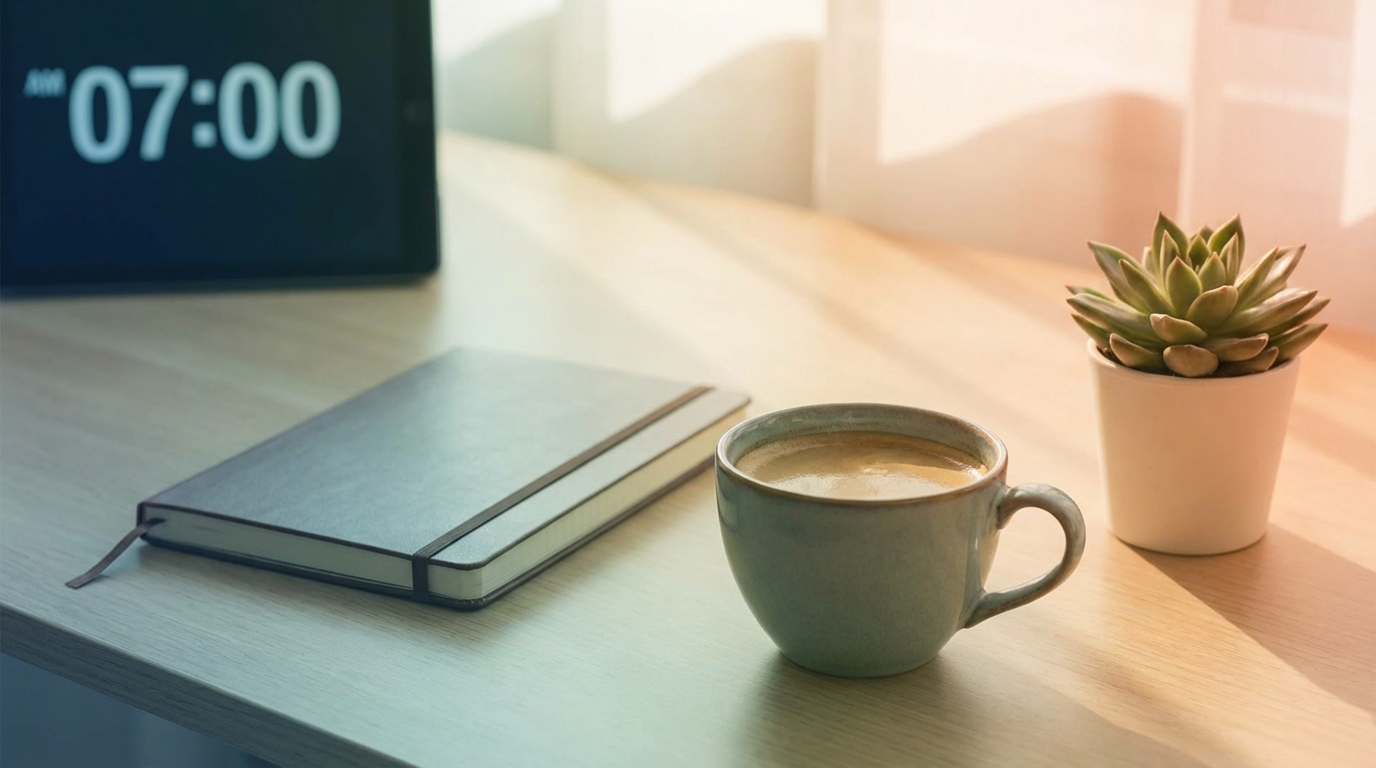
The Quiet Revolution: Why Minimalist Morning Rituals Matter
Imagine this: Your alarm goes off. Instead of that frantic, heart-pounding jolt, it’s a soft, rising swell of birdsong or a gentle ambient hum. You don’t reach for your smartphone. You don’t check your email. You don’t scroll through the latest headlines that, let’s be honest, are rarely designed to make you feel peaceful. Instead, you simply… exist for a few moments.
For many of us in the digital age, our mornings have become a cluttered battlefield of notifications and reactive tasks. We wake up and immediately hand over our cognitive real estate to someone else’s agenda. At DigitCrate, we believe that the most valuable “crate” you can pack is the first hour of your day. By applying the principles of minimalism to your morning, you aren’t just “getting ready” for work; you are curating an internal landscape of calm and intention that will carry you through the next sixteen hours.
Minimalism isn’t just about owning fewer chairs or wearing a capsule wardrobe; it’s about the intentional promotion of the things we most value and the removal of everything that distracts us from them. When applied to your morning, this philosophy creates a “life aesthetic” that feels light, purposeful, and profoundly restorative. Let’s dive into how you can strip away the noise and build a minimalist morning ritual that actually sticks.
1. The Science of the “First Hour” Digital Sabbatical
The biggest obstacle to a minimalist morning is that glowing rectangle on your nightstand. According to a study by IDC, 80% of smartphone users check their mobile devices within 15 minutes of waking up. This habit triggers a “reactive” state of mind. You are immediately bombarded with requests, stressors, and comparisons before your brain has even fully transitioned out of its theta wave state.
“The way you start your day determines the quality of your life. If you start in a state of reaction, you will spend the rest of the day reacting to the world instead of shaping it.”
Breaking the Dopamine Loop
When you check social media or email first thing, you experience a dopamine hit that feels like productivity but is actually just stimulation. To reclaim your morning, implement a 60-minute digital sabbatical. Leave your phone in another room or keep it on “Do Not Disturb” until you’ve completed your ritual. This creates a “digital vacuum” where your own thoughts have space to breathe.
Practical Steps for a Tech-Free Start:
- Invest in an analog alarm clock: Remove the excuse that you “need” your phone by your bed to wake up.
- Create a charging station: Charge your devices in the kitchen or living room, not the bedroom.
- Set a “Digital Sunrise” time: Decide that you won’t touch a screen until 8:00 AM or after your first cup of coffee.
2. Curating Your Physical Environment
Minimalist life aesthetics are deeply rooted in our surroundings. If you wake up to a room cluttered with laundry, half-finished projects, and piles of mail, your brain begins processing that “visual noise” immediately. Research from Princeton University found that clutter limits the brain’s ability to process information and increases stress.
To start your day with intention, your environment should reflect the mental state you want to achieve. This doesn’t mean your house must look like a sterile museum; it means creating pockets of peace.
The Power of the “Reset”
A minimalist morning actually begins the night before. I call this the “Morning Gift.” Spend five minutes before bed clearing your primary morning space—the kitchen counter where you make tea, the chair where you meditate, or your desk. When you wake up to a clear surface, you are giving your future self the gift of a fresh start.
Sensory Minimalism:
- Light: Open the curtains immediately. Natural light helps regulate your circadian rhythm and signals to your brain that it’s time to be alert.
- Sound: Seek out silence. If your environment is noisy, use white noise or soft, wordless lo-fi beats (DigitCrate favorites!) to create a focused atmosphere.
- Scent: A simple ritual like lighting a single candle or brewing fresh coffee can act as a “sensory anchor,” telling your brain that the ritual has begun.
3. Mindful Movement: Less is More
Many people fail at morning routines because they try to do too much. They think they need a 45-minute HIIT workout, followed by 20 minutes of meditation and 10 minutes of journaling. That isn’t minimalism; that’s just another “to-do” list.
In the world of minimalist aesthetics, we value the essential over the exhaustive. Instead of an intense workout, focus on simple, mindful movement that connects your mind to your body.
The 5-Minute Flow
You don’t need a gym membership or fancy equipment. Spend five minutes doing basic stretches or a sun salutation. The goal is to acknowledge your physical self. I personally find that five minutes of focused stretching does more for my mental clarity than a chaotic 30-minute run when I’m short on time.
The Stillness Practice
Meditation often feels daunting, but a minimalist approach makes it accessible. Set a timer for just three minutes. Sit in a comfortable chair, close your eyes, and follow your breath. When your mind wanders (and it will), gently bring it back. This isn’t about “emptying the mind”; it’s about observing the mind without getting swept away by it.
4. The “One Big Thing” Strategy for Productivity
Productivity in a minimalist context isn’t about doing more; it’s about doing what matters. Most of us start our day with a list of twenty tasks, which leads to “decision fatigue”—a psychological phenomenon where the quality of our choices diminishes after making too many of them.
The Ivy Lee Method Simplified
During your morning ritual, identify one single task that would make your day feel like a success if you accomplished nothing else. This is your “One Big Thing.” By identifying it early, you remove the mental clutter of wondering what to work on when you finally sit down at your desk.
Example: Instead of saying “I need to work on the project,” your One Big Thing might be “Write the first 500 words of the project proposal.” It’s specific, manageable, and essential.
5. Simple Nutrition: The Minimalist Breakfast
Life aesthetics extend to what we consume. In a world of “superfood” smoothies with twenty ingredients, there is a profound beauty in simplicity. A minimalist breakfast should be nourishing, easy to prepare, and consistent.
The Power of Routine
Many of the world’s most successful minimalists eat the same thing for breakfast every day. Why? To eliminate one more decision from their morning. Whether it’s a bowl of steel-cut oats, a piece of sourdough toast with avocado, or just a high-quality cup of black coffee, find what fuels you and stick to it.
Hydration First
Before you reach for caffeine, drink a full glass of water. Your body has been fasting and dehydrating for eight hours. This simple act is a form of self-respect—a way of saying, “I am taking care of my basic needs before I serve the world.”
6. Crafting Your Personal “Minimalist Menu”
To help you get started, let’s look at what a minimalist morning ritual looks like in practice. You don’t have to do all of these. In fact, I recommend picking only three to start.
- The Wake-Up (5 mins): No snoozing. Get out of bed, open the curtains, and drink a glass of water.
- The Stillness (5-10 mins): Meditation, prayer, or just sitting quietly with your thoughts.
- The Movement (5-10 mins): Light stretching or a short walk around the block.
- The Intention (5 mins): Writing down your “One Big Thing” in a physical notebook.
- The Nourishment (15 mins): A simple, healthy breakfast without digital distractions.
Total time: 30-45 minutes. It’s a small investment that yields a massive return in focus and emotional stability.
7. Overcoming the “All or Nothing” Trap
One of the biggest enemies of minimalism is perfectionism. You might have a morning where the kids wake up early, the dog throws up, or you accidentally sleep through your alarm. The minimalist approach to these “chaos days” is grace and compression.
If you don’t have 30 minutes, take three. Do one minute of deep breathing, drink a glass of water, and pick your One Big Thing. A ritual is a practice, not a performance. The goal is consistency, not perfection. Even a “micro-ritual” is better than falling back into a state of digital reaction.
Conclusion: The Aesthetic of a Well-Lived Morning
At the end of the day—or rather, the beginning of it—minimalism is about freedom. It is the freedom from the “shoulds,” the freedom from the noise, and the freedom to start your day on your own terms. By stripping away the digital clutter and focusing on a few essential actions, you create a life aesthetic that is both beautiful and functional.
Your morning is the rudder of your day. If the rudder is set correctly, you can navigate even the choppiest waters with a sense of internal calm. So, tomorrow morning, try something different. Leave the phone in the drawer. Open the window. Breathe. Choose intention over impulse.
Join the DigitCrate Conversation
What is the one thing you’re willing to remove from your morning to create more space? Is it the morning news crawl? The “five more minutes” snooze button? Or perhaps the habit of checking emails before you’ve even brushed your teeth?
Share your minimalist morning wins with us in the comments below or tag us on social media with #DigitCrateMornings. Let’s build a more intentional digital lifestyle, one morning at a time.