
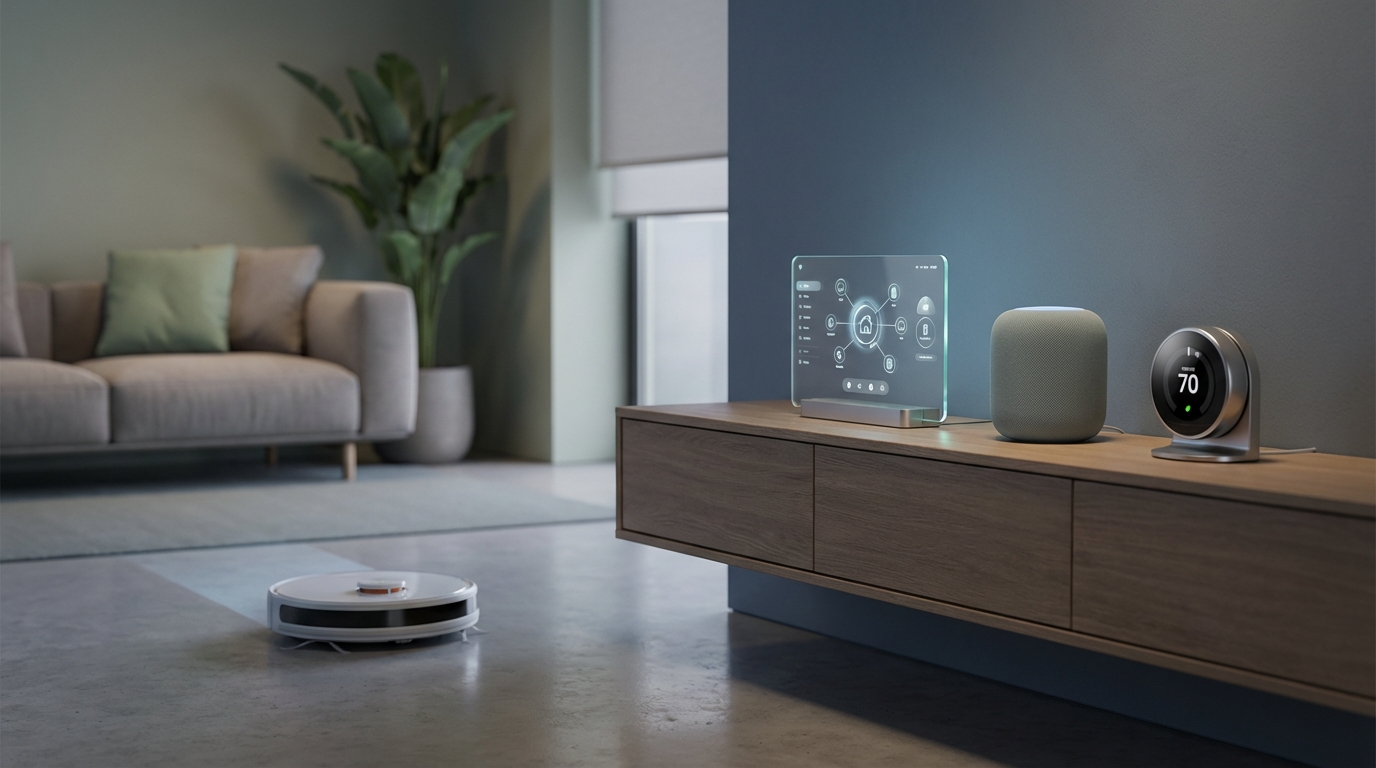
Smart Home Devices Worth Investing In 2026: A Minimalist’s Guide
Welcome back to DigitCrate, your curated source for minimalist tech and digital well-being. We’re always on the lookout for gadgets that enhance our lives without cluttering them. As we approach 2026, the smart home landscape is evolving rapidly. But which devices truly deserve a place in your thoughtfully designed, digitally-minimalist home? Let’s dive into the smart home devices worth investing in, focusing on functionality, sustainability, and seamless integration.
Why a Minimalist Smart Home?
For us minimalists, the appeal of a smart home isn’t just about flashing lights and voice commands. It’s about efficiency, convenience, and reducing unnecessary complexity. A well-curated smart home can:
- Save time and energy: Automate tasks like lighting, temperature control, and security.
- Reduce clutter: Streamline control with centralized hubs and voice assistants.
- Enhance well-being: Improve sleep quality, air purification, and overall comfort.
- Promote sustainability: Optimize energy consumption and reduce waste.
The key is to choose devices that genuinely improve your life, not just add to the digital noise.
Top Smart Home Investments for 2026
Here are some of the smart home devices that we believe will offer the best value and align with a minimalist lifestyle in 2026:
1. Advanced Smart Lighting Systems: Beyond On/Off
Smart lighting has matured beyond simple remote control. In 2026, look for systems that offer:
- Adaptive Lighting: These systems automatically adjust brightness and color temperature based on time of day and natural light levels, promoting better sleep cycles and productivity. Imagine your lights gradually shifting to a warmer tone as evening approaches, signaling your body to wind down.
- Presence Detection: Lights that intelligently turn on and off based on occupancy, minimizing energy waste. No more forgetting to switch off the lights in empty rooms!
- Integration with Wellness Platforms: Some systems will integrate with fitness trackers or sleep monitors to further personalize your lighting based on your biological rhythms.
Tip: Invest in a system compatible with Matter, the emerging connectivity standard, to ensure seamless integration with other smart home devices.
2. Energy-Efficient Smart Thermostats: Precise Climate Control
Smart thermostats are a classic smart home investment, but in 2026, they’ll be even smarter. Look for:
- AI-Powered Learning: Thermostats that learn your heating and cooling preferences and automatically adjust the temperature to optimize comfort and energy savings.
- Zone Control: Systems that allow you to independently control the temperature in different rooms, reducing energy waste by only heating or cooling occupied spaces.
- Integration with Renewable Energy Sources: Thermostats that can communicate with your solar panels or other renewable energy sources to prioritize using clean energy for heating and cooling.
Example: The Nest Learning Thermostat, even in its current iteration, learns your habits. By 2026, expect even more sophisticated algorithms and predictive capabilities.
3. Multi-Functional Smart Displays: The Central Hub
Smart displays are evolving into powerful central hubs for your smart home. In 2026, expect:
- Enhanced Voice Control: More natural language processing and seamless integration with a wider range of smart devices.
- Privacy-Focused Features: Physical camera shutters, microphone mute buttons, and on-device processing to protect your privacy.
- Personalized Information Dashboards: Displays that show you the information you need, when you need it, based on your routines and preferences (weather, calendar, news, etc.).
Tip: Choose a smart display with a clean and intuitive interface that doesn’t overwhelm you with information. Remember, minimalism is key!
4. Smart Blinds and Shades: Automated Light and Privacy
Smart blinds and shades offer automated control over natural light and privacy. In 2026, expect:
- Solar-Powered Options: Sustainable solutions that require minimal wiring and reduce your energy footprint.
- Scheduled Automation: Blinds that automatically open and close based on the time of day or sunrise/sunset times, optimizing natural light and energy efficiency.
- Integration with Weather Sensors: Blinds that automatically close during extreme weather conditions (e.g., strong sunlight, high winds) to protect your furniture and reduce energy waste.
Actionable Advice: Integrate smart blinds with your smart lighting system for a truly automated and energy-efficient home environment.
5. Air Quality Monitors and Purifiers: Breathe Easier
Air quality is becoming an increasingly important concern. In 2026, smart air quality monitors and purifiers will be essential for a healthy home. Look for:
- Real-Time Monitoring: Devices that track pollutants like particulate matter, VOCs, and carbon dioxide, providing you with a clear picture of your indoor air quality.
- Automated Purification: Purifiers that automatically adjust their filtration levels based on the detected air quality, ensuring optimal air purification without wasting energy.
- Integration with Smart Home Ecosystems: Devices that can trigger other smart home devices, such as automatically opening windows when CO2 levels are too high.
Example: Consider the Dyson Purifier Hot+Cool Formaldehyde. While not new, it hints at the sophistication of air purification we’ll see in 2026, with even more advanced sensors and filtration.
Making Smart Choices: Prioritizing Minimalism
When choosing smart home devices, remember the principles of minimalism: intention, functionality, and simplicity. Ask yourself:
- Does this device genuinely solve a problem or improve my life?
- Is it easy to use and integrate into my existing routines?
- Does it contribute to a more sustainable and efficient lifestyle?
Avoid impulse purchases and focus on building a smart home that is truly tailored to your needs and values.
The Future of the Minimalist Smart Home
In 2026, the smart home will be less about gadgets and more about seamless integration and personalized experiences. Expect to see:
- More intuitive interfaces: Voice control will become more natural and reliable, and apps will become more user-friendly.
- Enhanced privacy features: Manufacturers will prioritize data security and offer more control over your personal information.
- A greater focus on sustainability: Smart home devices will be designed with energy efficiency and environmental impact in mind.
By choosing the right devices and embracing a minimalist mindset, you can create a smart home that enhances your life without adding unnecessary clutter or complexity.
Conclusion
The smart home of 2026 offers incredible potential for enhancing our lives, increasing productivity, and promoting digital well-being. By focusing on devices that are functional, sustainable, and seamlessly integrated, we can create a minimalist smart home that truly serves our needs. Remember to prioritize intention and simplicity, and choose devices that align with your values. Happy smart homing!