Top 10 Productivity Hacks for Remote Workers in 2026 (DigitCrate Approved)
Welcome back to DigitCrate, your curated space for minimalist living in a digital world! As we hurtle toward 2026, the remote work revolution continues to evolve. Gone are the days of makeshift home offices and blurred lines between work and life. Today’s remote professionals are demanding more: more focus, more flexibility, and more control over their digital well-being. This isn’t just about squeezing more hours out of the day; it’s about working smarter, not harder, and crafting a remote work life that truly thrives. That’s why we’ve compiled this list of the top 10 productivity hacks, designed to help you not just survive, but excel in the remote landscape of 2026.
1. Embrace the Power of Hyper-Personalized AI Assistants
Forget generic productivity apps. In 2026, the name of the game is hyper-personalization. We’re talking about AI assistants that learn your work patterns, anticipate your needs, and proactively optimize your schedule. Think of it as a digital concierge for your work life. For example, instead of manually scheduling meetings, your AI assistant can analyze your calendar, your team’s availability, and even factor in your energy levels throughout the day to suggest the most optimal time. Tools like “AuraMind” (a hypothetical example) will integrate with your calendar, communication platforms, and even your smart home to create a seamless, productivity-boosting experience. The key is to choose an AI assistant that prioritizes privacy and data security, aligning with DigitCrate’s minimalist ethos.
2. Time Blocking 2.0: Contextual Time Blocking
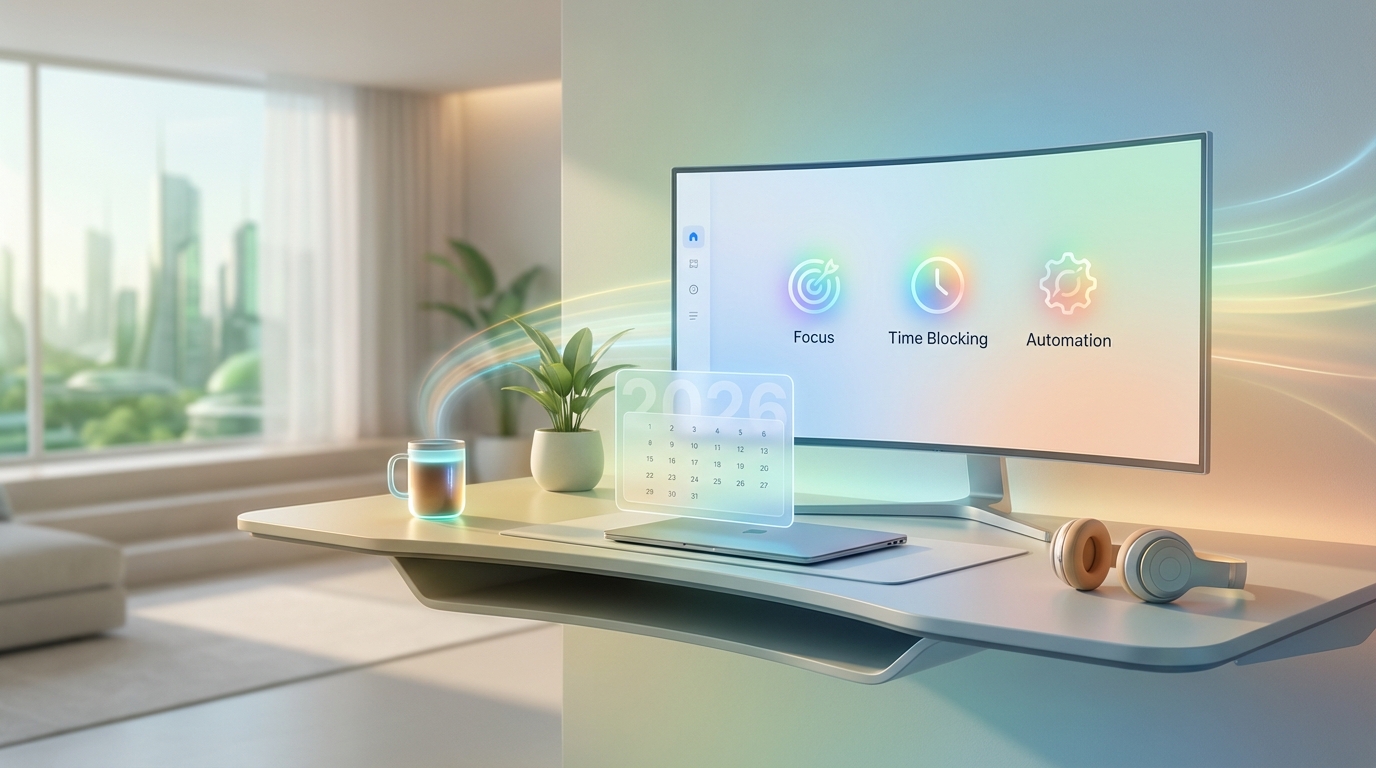
Time blocking is a classic productivity technique, but in 2026, it’s getting a serious upgrade. Instead of just blocking out time for specific tasks, we’re talking about contextual time blocking. This means grouping similar tasks together based on the type of mental energy they require. For example, instead of scattering email checking throughout the day, dedicate a specific block to all communication-related activities. This reduces context switching, allowing your brain to focus more effectively. Experiment with different contextual blocks (e.g., “Creative Deep Work,” “Administrative Tasks,” “Communication Blitz”) to find what works best for you.
3. The Deep Work Sanctuary: Optimizing Your Environment
Creating a dedicated workspace free from distractions is crucial, but in 2026, it’s about more than just a desk and a chair. It’s about creating a deep work sanctuary – a space designed to maximize focus and minimize distractions. This might involve noise-canceling headphones with integrated biofeedback sensors that adjust the music based on your stress levels, smart lighting that mimics natural daylight, and even a physical “do not disturb” signal that alerts household members when you’re in deep work mode. Remember, minimalism is about intentionality. Curate your space with only the essentials and eliminate anything that doesn’t contribute to your focus.
4. Mastering Asynchronous Communication: The Email Revolution
Email is still relevant in 2026, but its role is evolving. The key is to master asynchronous communication. This means communicating in a way that doesn’t require immediate responses, allowing everyone to work at their own pace. Establish clear communication protocols with your team, using project management tools like “FlowState” (another hypothetical example) for tasks and deadlines, and reserving email for less urgent matters. Consider using email filters and automated responses to manage your inbox effectively and avoid getting bogged down in unnecessary notifications.
5. The Pomodoro Technique with a Twist: Bio-Breaks
The Pomodoro Technique is a time-management method that uses focused work intervals, broken by short breaks. In 2026, we’re adding a bio-break component. Instead of just taking a generic break, use your breaks to engage in activities that actively rejuvenate your mind and body. This could include short meditation sessions, stretching exercises, or even just stepping outside for a few minutes to soak up some natural light. These bio-breaks help to combat mental fatigue and improve overall productivity.
6. Digital Detox Days: Reclaiming Your Focus
In our hyper-connected world, it’s easy to get overwhelmed by digital information. That’s why digital detox days are essential for maintaining mental clarity and focus. Schedule regular days where you disconnect from all work-related technology. This allows you to recharge your batteries, reconnect with your personal life, and return to work feeling refreshed and motivated. Communicate your digital detox days to your team in advance to avoid any disruptions.
7. The Power of Micro-Learning: Continuous Skill Development
Staying competitive in the remote work landscape requires continuous skill development. But who has time for lengthy courses? Enter micro-learning – bite-sized learning modules that can be completed in just a few minutes. Use platforms like “SkillSprint” (a hypothetical example) to learn new skills during your commute, lunch break, or even while waiting in line. This allows you to continuously improve your skills and stay ahead of the curve without sacrificing valuable work time.
8. Prioritizing Sleep and Mindfulness: The Foundation of Productivity
This might seem obvious, but it’s worth reiterating: sleep and mindfulness are the foundation of productivity. Prioritize getting at least 7-8 hours of quality sleep each night. Establish a regular sleep schedule and create a relaxing bedtime routine to wind down before bed. Practice mindfulness techniques like meditation or deep breathing to reduce stress and improve focus. A well-rested and mindful mind is a productive mind.
9. Leveraging Smart Task Management Systems: Visualizing Your Workflow
In 2026, task management systems are more sophisticated than ever. They offer advanced features like visual workflow mapping, automated task assignment, and real-time progress tracking. Tools like “ProjectZen” (hypothetical) allow you to visualize your entire workflow, identify bottlenecks, and optimize your processes for maximum efficiency. Choose a system that aligns with your preferred work style and integrate it with your other productivity tools for a seamless experience.
10. Building a Remote Work Community: Fostering Connection and Collaboration
Remote work can be isolating, but it doesn’t have to be. Actively build a remote work community by connecting with other remote professionals online or in person. Share tips, collaborate on projects, and offer each other support. This not only helps to combat feelings of isolation but also provides valuable opportunities for learning and growth.
Conclusion: Thriving in the Remote Work Era
The remote work landscape of 2026 is all about intentionality, personalization, and digital well-being. By embracing these 10 productivity hacks, you can create a remote work life that is both productive and fulfilling. Remember, minimalism isn’t about deprivation; it’s about focusing on what truly matters. By streamlining your work processes, optimizing your environment, and prioritizing your mental and physical health, you can unlock your full potential and thrive in the remote work era. Now go forth and create your dream digital life, one carefully curated decision at a time! Until next time, stay minimalist, stay productive, and stay DigitCrate approved!